Monday, November 18, 2019

Behind the Scenes Weekend at the Museum

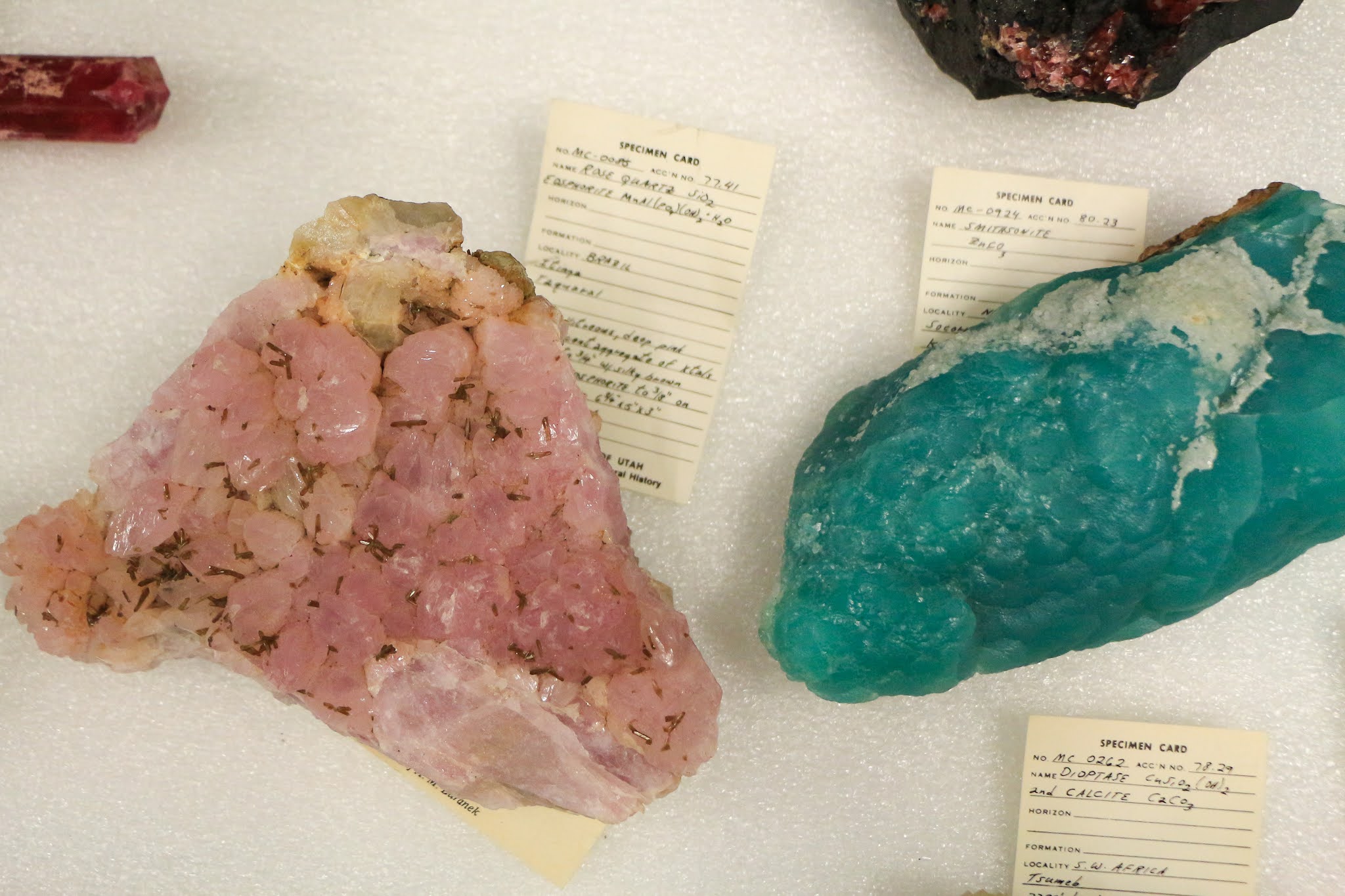
The best part of the year is Behind the Scenes Weekend at the Natural History Museum of Utah. This year I volunteered showing guests the digitization project (digitizing all 1.8 million specimens in the collections). Even for volunteers, Behind the Scenes is the only time people can see the items that are not on display.


Tuesday, November 5, 2019

Fossil Prep

Finally finished with my last fossil preparation “patient,” a hadrosaur (duckbilled dinosaur) fibula.


Friday, September 6, 2019

"The Eternal Frontier" and "Fossil Legends of the First Americans"

I’ve recently read two super interesting books that need to be shared.

First: “The Eternal Frontier: An Ecological History of North American and its Peoples,” by Tim Flannery. It really is an ecological history, a history of life, the universe, and everything since that fateful day 65 million years ago when the Chicxulub asteroid fried the whole of North America. The only plants that survived were sheltered at the North Pole or in the lee of the Sierra Nevada and Appalachian ranges. The only animals that survived were little burrowing land critters and little river water critters. Then starting 60 million years ago, species—mammal, bird, plant, insect, etc.—started migrating into and out of the continent via Beringia (from Siberia) and via Greenland (from Europe); and later via the isthmus from South America. Some species even immigrated, evolved, emigrated, evolved, and immigrated back. (“A 60-million-year tradition of immigration has brought almost everything—from elephants to Italians—to North America.”) Humans immigrated across Beringia around 13,200 years ago, and at the same time many species of cool megafauna went extinct (mammoth, mastodon, ground sloths, giant short-faced bears, glyptodonts [those armadillo-things the size of a VW Beetle], wooly rhinos, etc.). The extinctions may have been related to climate change, but hunting by humans certainly didn’t help the situation. Hunting pressure caused a rapid and dramatic evolution of bison from Bison priscus (big solitary browsers with straight horns) to Bison bison (smaller herding grazers with curved horns for crashing heads with other bulls, and with a bigger hump as counterbalance to the head always on the ground grazing). The only really successful groups of animals that evolved in North America are the canids, camels, and horses. (Horses evolved here, migrated to Eurasia, went extinct here, then were brought back by European colonials.) Those three—canids, camels, horses—all evolved to deal with sub-optimal environments (horses can eat poor-quality roughage, camels conserve water, and canids live in a pack that communally raises the pups of the alpha pair).


Titanis: 1-2 million years ago this super-scary bird stalked North America: 3 meters in height, 400 kg in weight, and with wings that “had re-evolved an opposable ‘thumb’, which was evidently used to grasp struggling prey.”


Second: “Fossil Legends of the First Americans,” by Adrienne Mayor. The general assumption in society and in academia is that dinosaurs and other extinct species were “discovered” by (white, East Coast, male) scientists, just as America was “discovered” by Columbus. Of course, Native American populations had long since discovered the fossils and investigated them, recognizing their anatomy better than most people, and developing stories to explain their existence. The Zuni recognized that mosasaurs and ammonites clearly demonstrated a watery “days of the new,” which was followed by geological and climatological change to dry land. The Utes right here in Utah called trilobites “little water bugs in stone,” perceiving they were extinct water creatures. In many cases, even as “Pre-Darwinian” cultures, they figured out the significance of fossils in demonstrating deep time, evolution, extinction, climate change, catastrophism, etc. For example, bones of the extinct Pleistocene bison and beaver (both much huger than present versions) were recognized as a “grandfathers” of modern bison and beavers. Ancient beavers (Palaeocastor) dug spiral-shaped burrows: white scientists were befuddled and called them “devil’s corkscrews” but Native viewers called them beaver’s lodges. Mammoth and mastodon bones are often found associated with eroding river beds, so they were thought to be water monsters, but definitely four-legged mammalian water monsters, not sea serpents or the like, because the indigenous folks understood anatomy.


Saturday, July 20, 2019

Self-Serve Trilobites

There's a fun place in the middle of nowhere in western Utah called U-Dig Fossils. It's in the Wheeler Formation, a dark blue-grey slate that formed roughly 500 million years ago in the Cambrian, and is full of trilobites. You pay an admission fee and are supplied with a rock hammer and a big plastic bucket, and an employee shows you how to choose likely rocks and split them along the layers. It's crazy hot in July, so make sure to take sunblock and water. 

The whole family can participate.

Asaphiscus wheeleri, a trilobite

Elrathia kingii, another trilobite species

Margaretia dorus, a seaweed-type algae. This algae was happily photosynthesizing a half a billion years ago, making oxygen for every land animal that ever evolved, from dinosaurs to mammoths to humans.

Asaphiscus wheeleri


Tuesday, April 9, 2019

Petrified Forest National Park

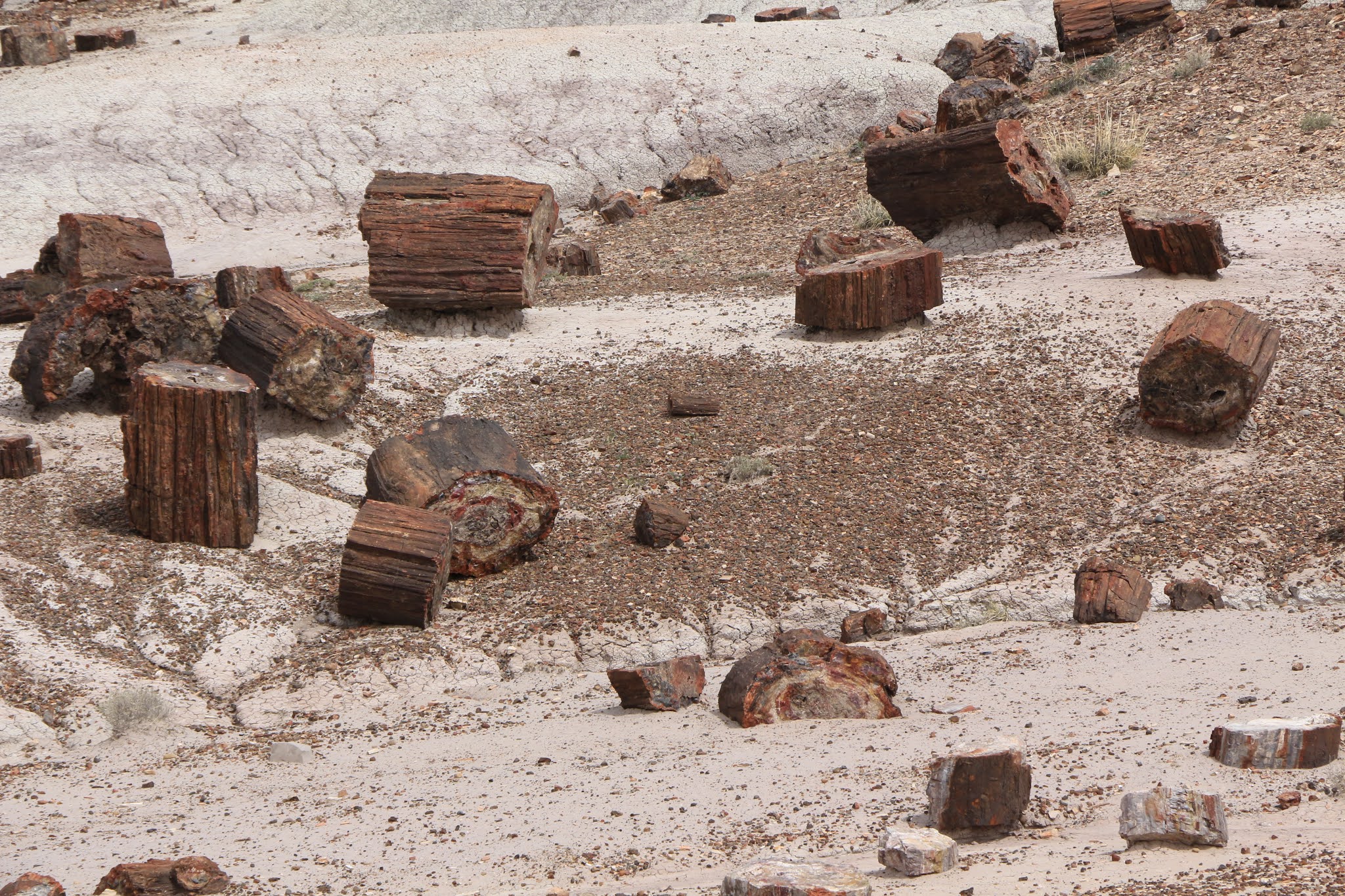
Petrified Forest National Park

Cool place! The petrified logs (conifers and ginkgos) date to the Triassic period, around 208-228 million years ago. The Triassic was before the Jurassic, and the kings of the Triassic weren't dinosaurs. They were assorted reptiles, including phytosaurs and archosaurs. Some were basically long-legged, death-dealing crocodiles that ran along on two legs. Our mammalian ancestors were little guys, wisely hiding from the teeth.


Smilosuchus gregorii, a phytosaur


Saturday, November 24, 2018

Houston Museum of Natural Science

Houston Museum of Natural Science

Thanksgiving with family in Texas means a trip to the Houston Museum of Natural Science.


I love natural history museums. LOVE them. I grew up in Wisconsin, and every few months we would make a weekend trip to Chicago to visit the Field Museum, along with its neighbors, the Shedd Aquarium and the Adler Planetarium.


The current star resident of the Field is SUE, a very large and very complete Tyrannosaurus rex skeleton. (And very expensive; Disney and McDonald’s helped the Field buy the specimen to keep it accessible to the public and to scientific researchers, rather than allowing it to disappear into a private collection.) When I was a kid, the Field was in pre-SUE days, but I still adored the museum—the gems and minerals, the dioramas of taxidermied mounts, the soaring foyer like a cathedral.


When/if I can ever retire, I want to spend my retirement traveling the world, visiting natural history museums.

The paleontology section of HMNS is arranged chronologically by geographic era. I like that; it appeals to my sense of organization. So you start with very early life in the form of stromatolites, footstool-shaped structures created by blue-green algae. Then to the Cambrian with a really phenomenal collection of trilobites (~500 million years ago), then to the Permian, when the world was populated by weird synapsids—ancestors of mammals—like sail-backed Dimetrodon and saber-tooth gorgons. The Permian ended with a mass extinction bigger than the mass extinction that killed the dinosaurs: 90-95% of terrestrial and marine species vanished. Then the exhibit moves on to marine reptiles, dinosaurs, pterosaurs, and then to the Cenozoic (modern era). Someday, I need to go spend a day at the museum by myself. My family left me behind in the Permian.


This trilobite's eyes are pyritized: replaced by pyrite (fool's gold). Isn't that cool?


Trilobites

Dimetrodon - Not a Dinosaur!

Saber-tooth gorgon, from way before the time of dinosaurs.


Petrified wood, geologist for scale.


Humungous crinoid, teenager for scale.


"Wyrex" the bobtail T. rex. Someone chomped off the back half of his tail. The bones do not show signs of healing, so the wound may have been fatal. (Certainly there would have been a lot of hemorrhage from a traumatic amputation of that hugely muscular tail!)

Quetzalcoatlus had a 35-foot wingspan!


Near the main entrance is the Curator’s Choice, which features some of the recent acquisitions. The museum acquires 3,000-5,000 items every year for research or future exhibitions. Cool objects include birds carved from sperm whale teeth, and a fossilized Jurassic jellyfish.


A special exhibit at the museum is called Death By Natural Causes, which features all the exciting ways that nature wants to kill you, including toxic minerals, venomous animals, poisonous plants and fungi, epidemics, and attacks by large angry creatures.  


Hippopotamuses can kill you. Look at those teeth! (Behind the hippo is an armadillo; they kill you by transmitting leprosy.)

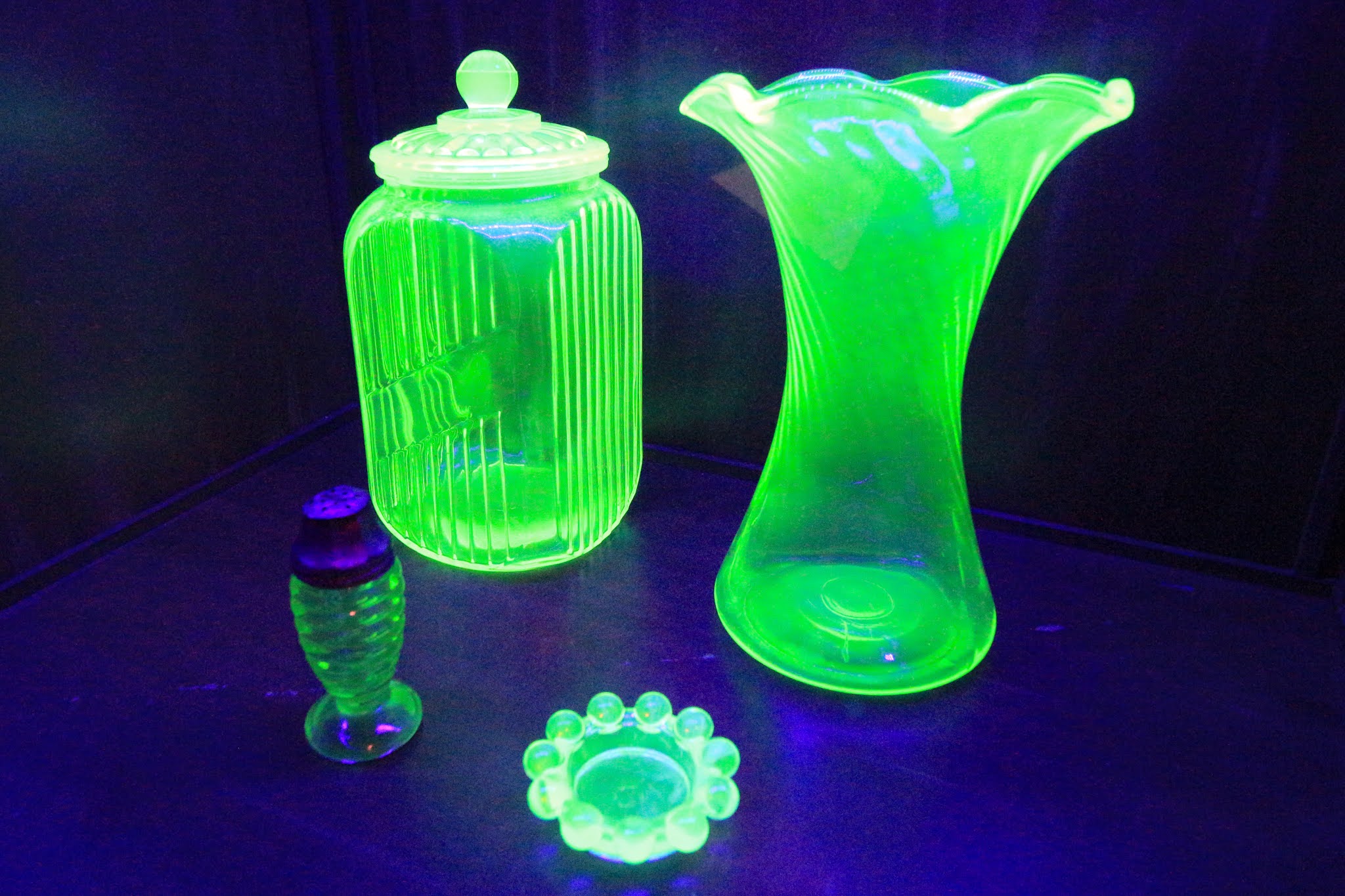
Uranium glass under UV light

Deadly pigments

This dress is gorgeous but the green dye is copper arsenite, which could give the wearer arsenic poisoning.

Snakebite mechanics


Another area of the museum is put together to replicate the Cabinet of Curiosity that Ferrante Imperato assembled in 1599; Cabinets of Curiosity were eclectically jumbled assortments of natural history specimens collected by wealthy European travelers.


And so much more!

Shells!

Rocks and minerals!

A giant squid model!

Live butterflies!